Mastering French Onion Soup: Technique Lessons from Bon Appétit’s French Fundamentals
Learn the art of making traditional French onion soup with expert techniques from Bon Appétit's French Fundamentals. Discover how to create a rich beef bone stock and achieve the perfect caramelised onions for a comforting bistro classic.
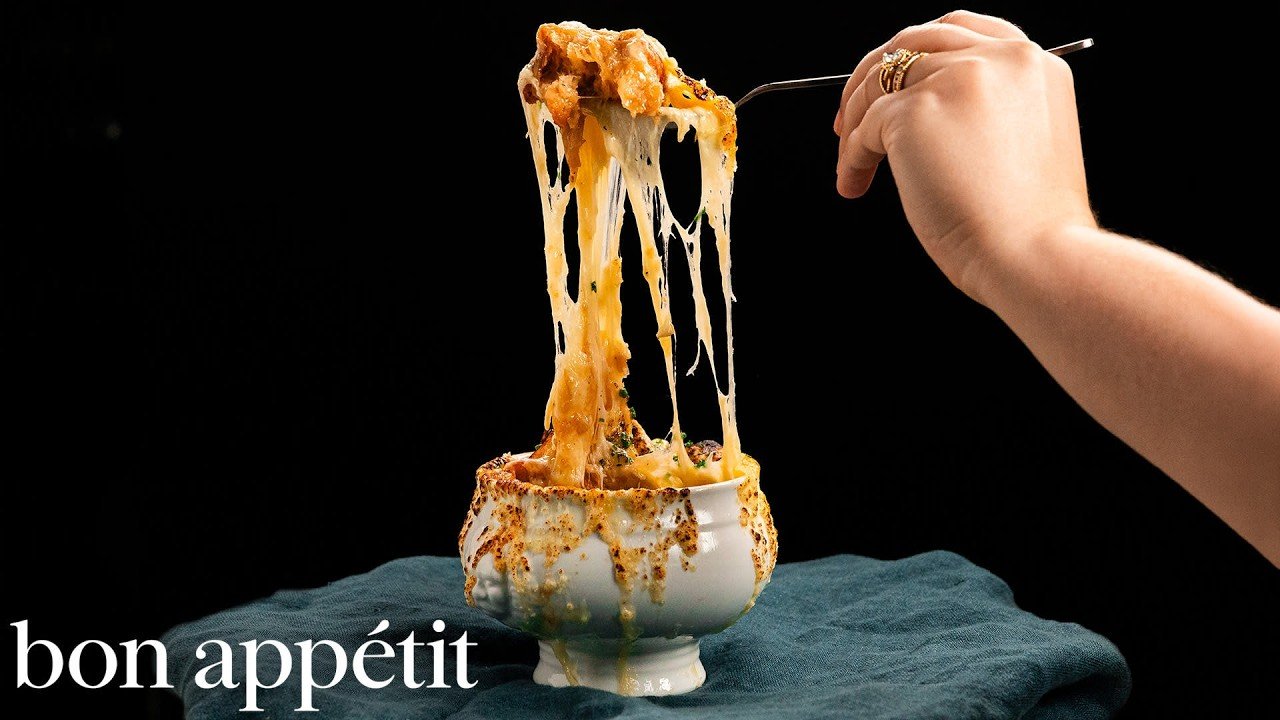
There are few bistro classics as comforting or universally beloved as traditional French onion soup (soupe à l'oignon). Yet, despite relying on only a handful of humble ingredients, achieving true restaurant-quality depth requires patience, precise heat control, and uncompromised technique. In a masterclass feature for Bon Appétit’s French Fundamentals series, classical French methodology takes centre stage, demonstrating why shortcuts simply cannot replicate a proper bistro bowl.
The Foundation: A 12-Hour Roasted Beef Bone Stock
Great soup begins with great stock. Store-bought cartons often lack the natural gelatin and body required to carry rich, sweet onions.
To build an authentic base, oxtail, knuckles, and marrow bones are roasted at high heat for 30 minutes until deeply caramelised. The bones are then transferred to a large stockpot along with roughly chopped aromatics, tomato paste, half a bottle of red wine, bay leaves, and black peppercorns. Simmered low and slow for anywhere between 6 and 12 hours, the collagen in the bones breaks down naturally, producing a clean, glossy broth with immense body and zero need for artificial thickeners.
The Onions: Low, Slow, and Paper-Thin
The most common mistake home cooks make is rushing the onions over high heat. Achieving the signature silky texture and rich amber hue takes time and gentle care.
The Slice: Yellow onions are sliced top-to-bottom using a mandolin. Slicing with the grain preserves the delicate structure during long cooking so the onions soften into a melt-in-the-mouth texture without turning to mush.
The Sweat: Cooked over low heat for a full 90 minutes with a pinch of salt, the onions gradually release their moisture and break down naturally. Deglazing: In the final minutes, dry sherry is poured in to deglaze the pot, lifting the sticky, caramelised fond from the bottom and introducing a subtle, nutty sweetness.
Food Festivals
Coming up in the UK and beyond

Assembly and Gratination
Once the reduced beef stock is stirred into the caramelised onions and infused with fresh thyme and a touch of cognac, assembly begins in traditional tête de lion (lion’s head) porcelain bowls.
- Hidden Marrow: A piece of warm, roasted bone marrow is placed directly into the bottom of each bowl for an unexpected layer of rich flavour.
- Toasted Baguette: Slices of baguette, dried out gently in the oven, are floated on top of the piping-hot broth to soak up the soup without dissolving instantly.
- The Cheese Crown: A generous 50/50 blend of grated Comté and classic Gruyère is heaped over the bread, extending slightly over the rim.
- Broiling: The bowls are placed under a high grill until the cheese is bubbling, melted, and deeply golden, finished with a scatter of freshly snipped chives.
Related posts