Anthony Bourdain in Minas Gerais: Uncovering the Unsung Hero of Brazilian Cuisine
Explore Anthony Bourdain's journey through Minas Gerais, Brazil, where he uncovers the rich culinary heritage and vibrant food culture of this lesser-known region, highlighting its unique ingredients and communal dining traditions.

When we think of Brazilian food, the mind often wanders to the bustling beaches of Rio or the cosmopolitan energy of São Paulo. But as the legendary Anthony Bourdain discovered in his series Parts Unknown, the true heart of Brazilian cooking beats in a lesser-known region: Minas Gerais.
This landlocked state, roughly the size of France, is a culinary powerhouse built on tradition, resourcefulness, and a profound connection to the land. Bourdain travelled to Belo Horizonte, the capital of Minas Gerais, to uncover why everyone in Brazil agrees this is where the very best chefs come from.
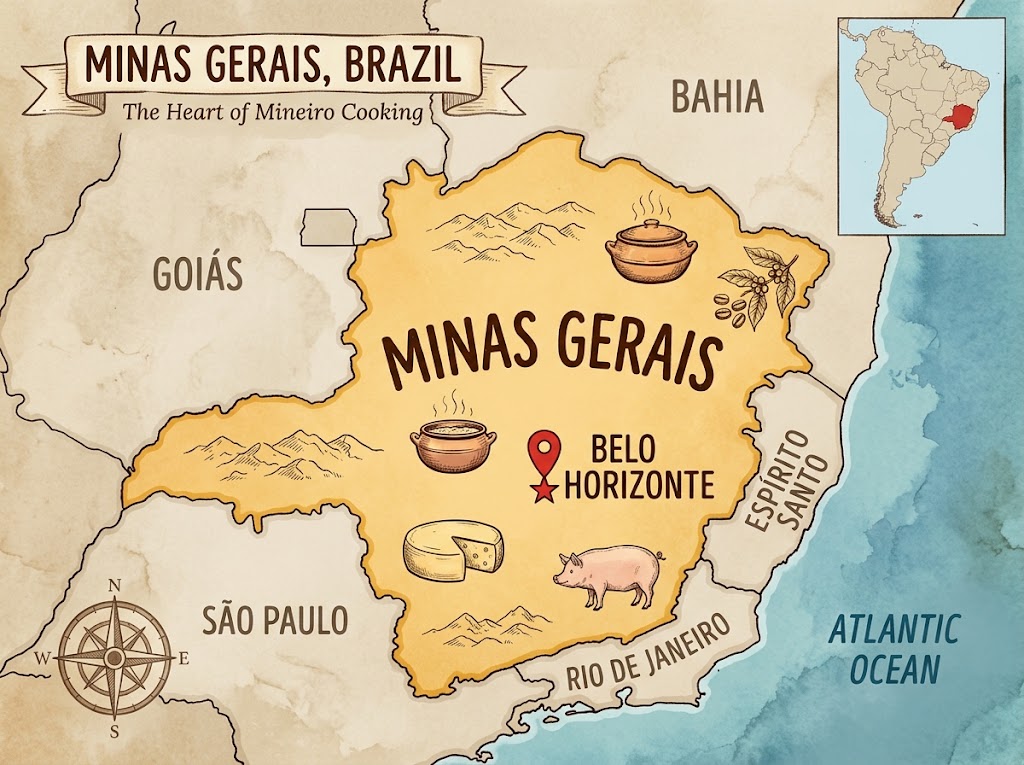
The Heart of Mineiro Cooking
Minas Gerais is often described as the soul of Brazilian gastronomy. At the bustling Mercado Central, chefs like Léo Paixão gather daily to source fundamental ingredients. It is a region overflowing with highly perishable, hyper-local produce like the notorious pequi fruit, which locals describe as tasting either heavenly or like a barnyard, complete with hidden spikes if you bite too deeply.
For centuries, Mineiro cuisine was often overlooked by fine dining establishments in favour of French and Italian imports. However, as Bourdain observes, a new generation of chefs is returning home after training abroad, determined to apply world-class techniques to their own heritage ingredients.
The True Roots of the Cuisine
The story of Mineiro food is deeply intertwined with Brazil's history. During the gold rush of the late 1600s, millions of enslaved Africans were brought to the region. As Bourdain discusses with local ambassador Zora Santos, the matriarchs of Mineiro cuisine were enslaved African women who had to make do with limited resources. They relied heavily on what they could grow in the yard, applying West African techniques to indigenous greens like ora-pro-nóbis and mastering the art of cooking every part of the pig.
Today, Afro-Brazilian culture remains the fundamental backbone of everything that makes Brazilian food so exceptional.
The Culture of the Boteco
You cannot understand Minas Gerais without understanding the boteco. These are not just pubs; they are neighbourhood institutions where the family is behind the counter full-time. Botecos serve what locals call "root food", slow-cooked, deeply comforting dishes like ox tongue with basil, tripe, and feijão tropeiro (beans with manioc flour and cured meats). It is cold-weather, mountainous food designed to be shared.
As the local chefs tell Bourdain, in Minas, you never cook just for yourself. Food is a communal experience, meant to be shared with family, friends, and anyone lucky enough to wander up to the table.
Food Festivals
Coming up in the UK and beyond

The Enduring Legacy of Women in the Kitchen
Historically, while men may have run professional restaurant kitchens, all the techniques, recipes, and traditions were passed down by mothers and grandmothers. Chefs like Bruna Martins are actively changing the landscape by running ambitious restaurants and making a point to hire women, particularly Black women, to honour their unacknowledged role as the true creators of this culinary culture.
For Bourdain, the journey through Minas Gerais is a masterclass in regional pride. It is a place where chefs are finally pushing back against the idea that foreign food is inherently more valuable, choosing instead to elevate the extraordinary flavours of their own backyard.
Classic Recipe: Traditional Mineiro Feijão Tropeiro
Feijão Tropeiro (Cattleman's Beans) is the ultimate expression of Mineiro cooking. Originating with the tropeiros (muleteers) who carried goods across Brazil during the 17th-century gold rush, this hearty dish combines cooked beans, toasted manioc flour, bacon, sausage, and eggs into a comforting, flavour-packed meal.
Prep time: 15 minutes | Cook time: 25 minutes | Serves: 4 to 6
Ingredients
* 400g cooked pinto beans or borlotti beans (drained, with beans kept firm)
* 150g smoked bacon, diced
* 200g smoked pork sausage (such as linguiça or chorizo), sliced
* 1 large onion, finely chopped
* 3 cloves garlic, minced
* 3 large eggs
150g coarse toasted manioc flour (farinha de mandioca torrada*)
* 100g spring greens or finely shredded kale
* 2 tbsp vegetable oil or lard
* Fresh parsley and spring onion, finely chopped
* Salt and freshly ground black pepper to taste
Method
- Crisp the meat: Heat a large skillet or wok over medium heat. Add the diced bacon and sliced sausage. Fry until golden and crispy, allowing the fats to render out. Remove the meat with a slotted spoon and set aside, leaving the rendered fat in the pan.
- Scramble the eggs: Push the fat to one side of the pan, crack in the eggs, and gently scramble them until cooked through. Remove the scrambled eggs and set them aside with the cooked meat.
- Sauté the aromatics: Add a splash of oil or lard to the pan if needed. Add the chopped onion and garlic, sautéing over medium heat for 3 to 4 minutes until soft and fragrant.
- Wilt the greens: Toss in the shredded greens or kale, cooking briefly for 1 to 2 minutes until wilted but still vibrant green.
- Combine the beans: Add the drained beans to the skillet. Stir gently for 2 to 3 minutes to allow the beans to absorb the flavours of the fat, garlic, and onions without mashing them.
- Stir in the manioc flour: Gradually fold in the manioc flour, stirring continuously over low heat until the flour coats the ingredients and takes on a light toasted brown colour.
- Finish and serve: Return the bacon, sausage, and eggs to the pan. Toss everything together until piping hot, then season with salt, pepper, and a generous scatter of fresh parsley and spring onions. Serve warm alongside white rice and sliced oranges.
Related posts