From Shed-Made Experiments to Global Bottles: The Real Story Behind James May’s Gin Journey
Discover the fascinating journey of James May's Gin, from humble shed experiments to a global production operation, blending artisanal craft with industrial precision.
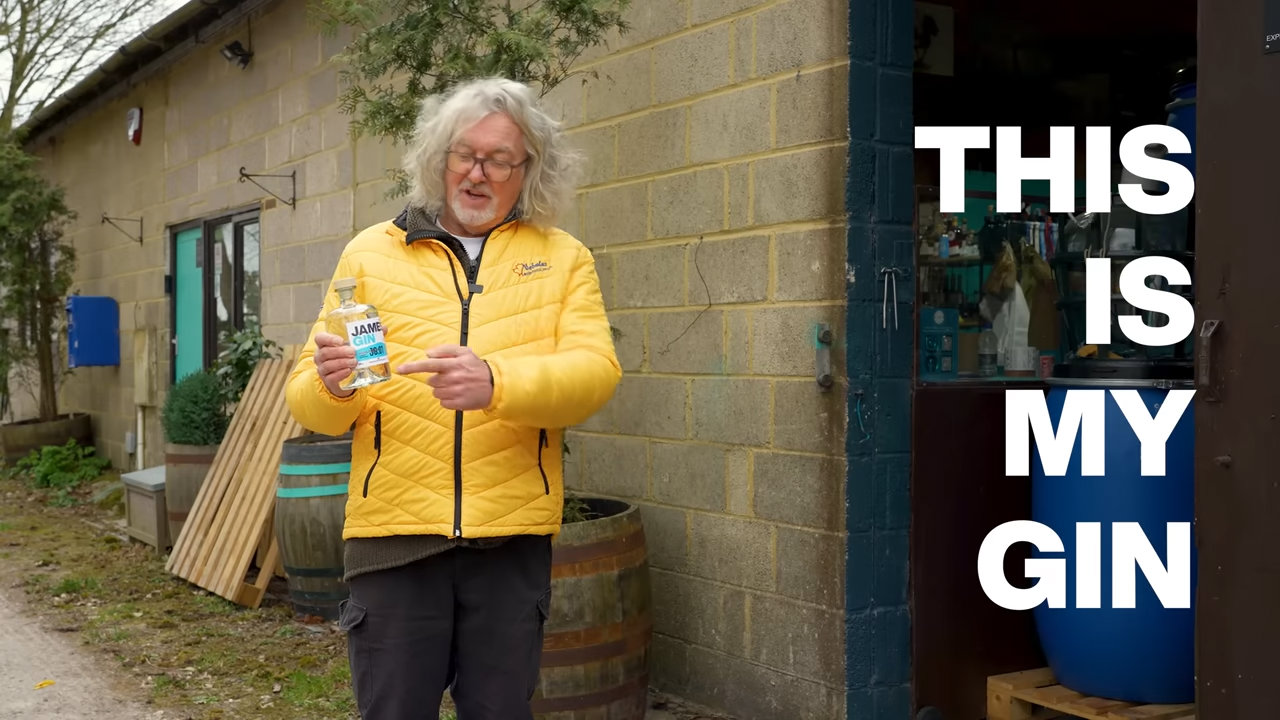
If you thought James May’s foray into the spirits world was just another celebrity branding exercise slapped onto a generic bottle, think again. In a behind-the-scenes look at how his creation is actually produced, James pulls back the curtain on the meticulous, slightly chaotic, and surprisingly technical journey of James Gin.
What started as a modest experiment in a freezing cold shed—labeled by hand using a contraption affectionately dubbed the "labelizer"—has evolved into a massive commercial operation producing tens of thousands of bottles at a time.
The Journey: From Micro-Distillery to Industrial Scale
Every unique flavor profile—from the famous Asian Parsnip to newer additions—begins with a brainstorming session and initial testing down in Hugh's micro-distillery. Using a humble 3-litre test still, recipes are tinkered with, noses are tested, and flavours are debated (mushroom notes included) until the perfect blend is found.
"Our gin is made with Essex water which comes through pipes built by Victorian engineers, so it's better."
However, scaling up a recipe designed for a shed to meet global demand is another challenge entirely. When production jumps to batches of 20,000 bottles, the process moves to historic distilleries in London dating back to the 18th century. From there, the highly concentrated, explosive distillate makes its way down to Deepest Essex, where it is blended with neutral grain spirit and deionized water (meaning zero ions to ensure absolute clarity and flavor integrity) to hit a perfect bottle strength of 40% ABV.
Shed vs. Industrial Scale: How It Compares
| Production Stage | The Micro-Distillery (Shed) | The Industrial Plant (Essex / London) |
|---|---|---|
| Batch Size | 3-litre test still / small experimental runs | 20,000 bottles per production run |
| Equipment | Miniature copper stills & hand-operated "labelizer" | 18th-century heritage stills, industrial conveyors, heat-shrink tunnels |
| Bottling & Finishing | Manually inserted labels and personal handling | Automated washing, 10-bottle fillers, mechanical corking & custom wax dipping |
| Quality Control | Informal tasting and tweaking with Hugh | Strict laboratory testing, professional "nosings", ABV checks, and individual bottle inspection |
Food Festivals
Coming up in the UK and beyond


Precision Meets Craft
Before a single case is shipped out—whether heading to local fans or packed onto containers bound for the USA—every batch undergoes rigorous quality control. This includes professional "nosing" (a posh term for giving it a careful sniff), tongue-tasting, and meticulous mechanical checks where corks, custom wax caps, and etched batch numbers are applied under strict watchful eyes.
It’s a brilliant confluence of artisanal craft and heavy industrial machinery—proving that James's passion project has truly grown up without losing its quirky personality.
***
Ready to taste the result of all that shed-crafted ambition? Take a look at our range and pick up a bottle over on our shop page.
Related posts